Protect fall vegetables from frost without guessing
Frost protection works best when it begins with the crop and the forecast. Tender plants need a harvest decision or real thermal protection; hardy cool-season crops may need only a wind and moisture plan.
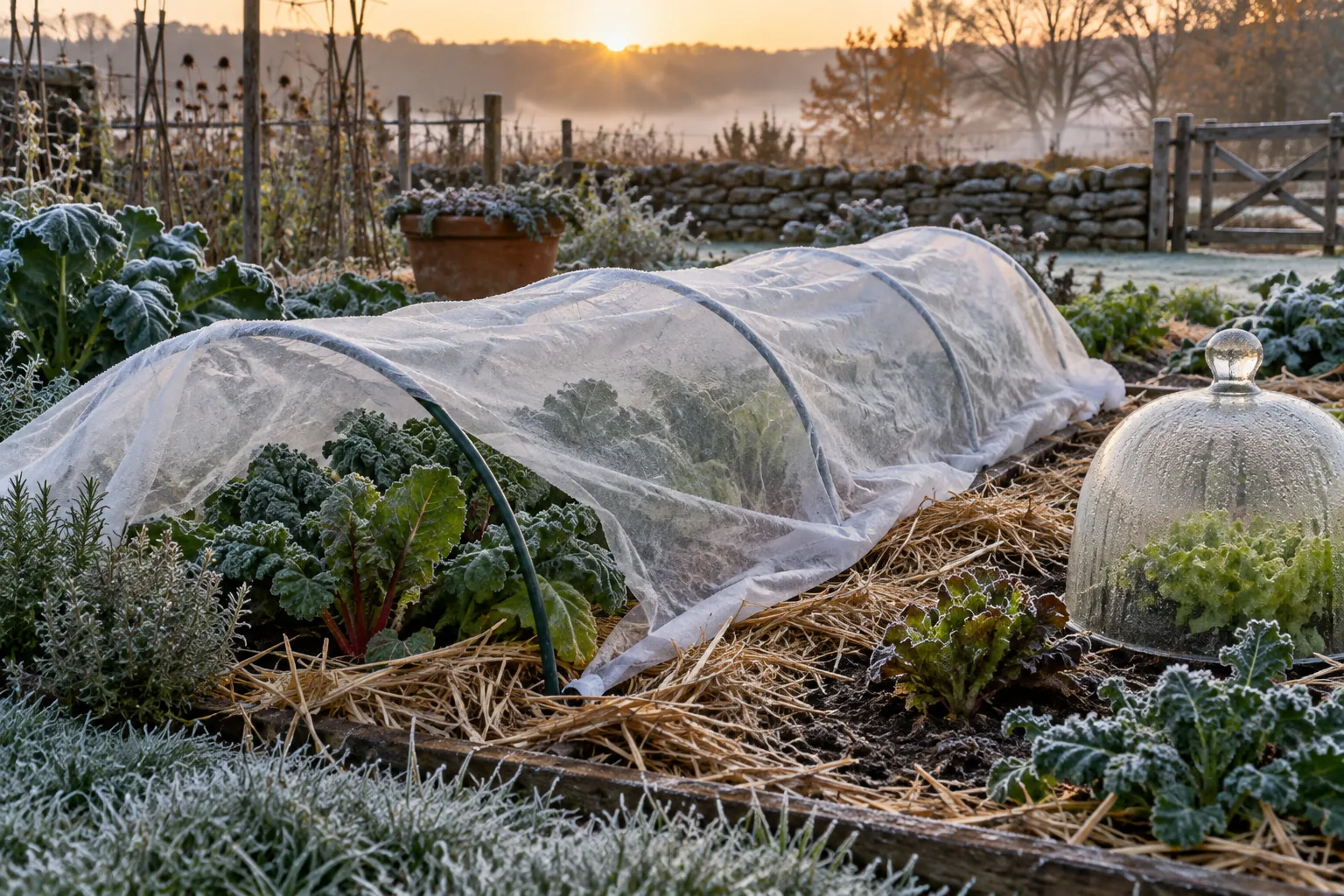
Sort crops by the decision they need
| Crop signal | Action before a frost | Check after the night |
|---|---|---|
| Tender crop with a forecast near freezing | Harvest usable produce or cover the whole plant before dusk. | Wilt, blackened tissue, and whether the cover touched foliage. |
| Cool-season crop known to tolerate light frost | Water if dry, cover if the forecast is unusually cold, and keep roots protected. | Leaf texture and whether the soil or container froze. |
| Plant in a pot or exposed container | Move it to a sheltered place or insulate the container; roots are more exposed. | Root-zone temperature and wind damage. |
The evening-before routine
- Read the overnight low, wind, cloud cover, and frost advisory from a reliable local forecast; a calm clear night can create frost even when the air forecast is slightly above freezing.
- Harvest ripe tomatoes, peppers, beans, and other tender produce rather than asking a cover to save a crop already at its limit.
- Water dry soil earlier in the day when practical; do not leave foliage wet at dusk as a substitute for a cover.
- Use a breathable row cover, cloth, or frost blanket supported so it does not rest on delicate foliage. Secure the edges to stop wind from lifting it.
- Remove or vent the cover after temperatures rise. A cover that protects overnight can overheat a plant in morning sun.
Make a protection card
For each bed, record crop, maturity, forecast low, cover type, support points, edge weights, and the morning removal time. Add one photograph of the installed cover. The record reveals whether the failure was a bad forecast, an exposed edge, a cover that was too light, or a crop that should have been harvested.
Example: lettuce beside basil
Lettuce may recover from a light frost while basil is damaged by temperatures near freezing. Cover the lettuce if the night is unusually cold, but harvest the basil rather than treating the two crops as one frost zone. The useful plan follows the least hardy crop and the value of what is still harvestable.
Failure modes and boundaries
- Using plastic directly on leaves, which can create cold contact damage and condensation.
- Leaving gaps at the ground where wind removes the protection.
- Forgetting the cover the next morning.
- Assuming a frost-tolerant crop is immune to repeated hard freezes, frozen soil, or drying wind.
Do not use a cover as a reason to ignore a freeze warning, unsafe access, or a crop’s maturity limit. Use local extension advice for unusual crops, tunnels, and long freezes.
Use the fall bed decision sheet after the last harvest and the storage route guide for produce brought indoors.
Sources: University of Minnesota Extension: extending the growing season and fall-harvest vegetable hardiness guidance.