Choose a storage route before the harvest arrives
Storage is not one method. Decide whether a crop will be eaten soon, kept cool, frozen, dried, or preserved with a tested process. That decision should happen before the basket is full.
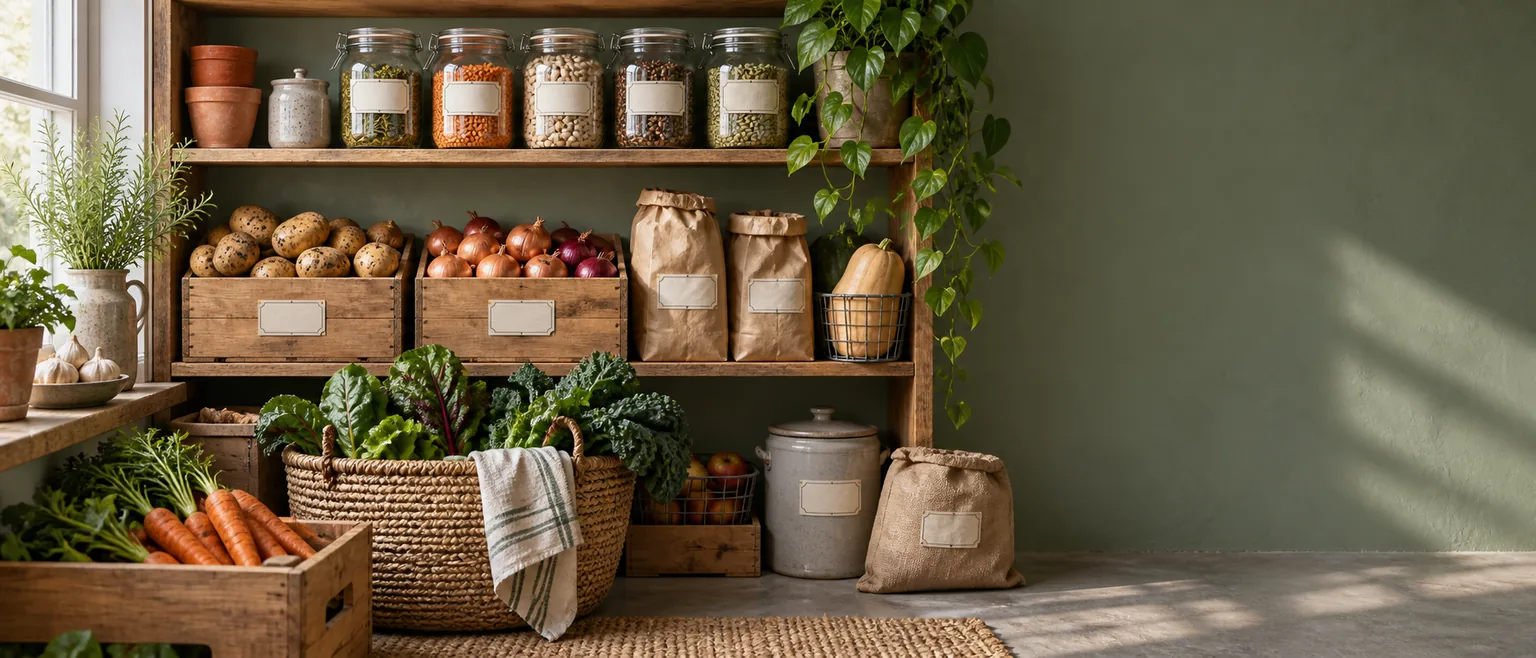
The route selector
| Harvest condition | First route to consider | Record before storing |
|---|---|---|
| Tender leaves or herbs | Use promptly, chill briefly, or freeze using a crop-specific method. | Date, crop, amount, and likely meal. |
| Firm roots or sound winter crops | Cool, dark, ventilated storage when the crop’s guidance allows it. | Damage, soil condition, container, and inspection date. |
| A glut that will not be eaten soon | Freeze, dry, or use a tested preservation recipe rather than improvising. | Method, batch date, label, and intended use. |
Make the decision in three passes
- Separate damaged, diseased, or overripe produce from sound produce; do not use storage to hide a quality problem.
- Estimate the amount the household can use in seven days. Keep the rest out of the “fresh” route.
- Choose only a method whose equipment, space, and tested instructions are available today.
Use a small batch record
Write: crop, quantity, preparation, method, date, container, location, and first inspection date. A jar or freezer bag without a date becomes a mystery; a crate without an inspection plan becomes a place for one spoiled item to spread.
Where to stop
Do not invent room-temperature canning methods for low-acid vegetables. Use current tested instructions from a recognised food-preservation source, and discard food showing mould, leakage, fermentation, or an unexpected smell rather than tasting it.
Sort the harvest before choosing the method
Do not put every crop through the same process. Make three piles: use soon, store fresh, and process now. The first protects quality, the second needs a suitable place and inspection routine, and the third needs the right equipment and instructions.
A repeatable batch workflow
- Harvest in sound condition and prepare according to the crop’s needs.
- Separate damaged produce immediately instead of letting one item affect a whole container.
- Measure the batch before preparing it so the equipment is not overloaded.
- Label every container with crop, method, date, and first-use or inspection date.
- Review stored food on a fixed day and move anything approaching its quality limit into the next meal.
Example: too many beans
If a picking produces more beans than the household will eat in a few days, keep the best amount fresh, prepare the remainder for freezing using current crop-specific instructions, and record the batch size. Next season, reduce the sowing or stagger it. The useful result is not the biggest harvest; it is the largest amount that remains identifiable, safe, and wanted.
Common storage mistakes
- Putting warm or damp food into a sealed container.
- Storing damaged produce with sound produce.
- Using a room-temperature preservation method from an untested post.
- Failing to record dates or assuming the freezer will identify the contents.
- Keeping a batch after mould or an unexplained smell appears.
Use the small-garden plan to reserve realistic storage crops and the succession-sowing guide to reduce future gluts.
Choose the simplest safe route
When two methods could work, prefer the one the household can label, inspect, and use consistently. A technically impressive method is not useful if it requires equipment, space, or timing that will not be available at harvest. Write the route on the crop plan before sowing so the storage decision is part of production rather than an emergency response to a glut.
Sources: RHS root-vegetable storage, NCHFP dried-food storage, and NCHFP freezing guidance.