How do you save vegetable seeds without losing the record?
Save seed only when you can identify the parent plant, maturity, method, and limits. A labeled record is more valuable than a full jar.
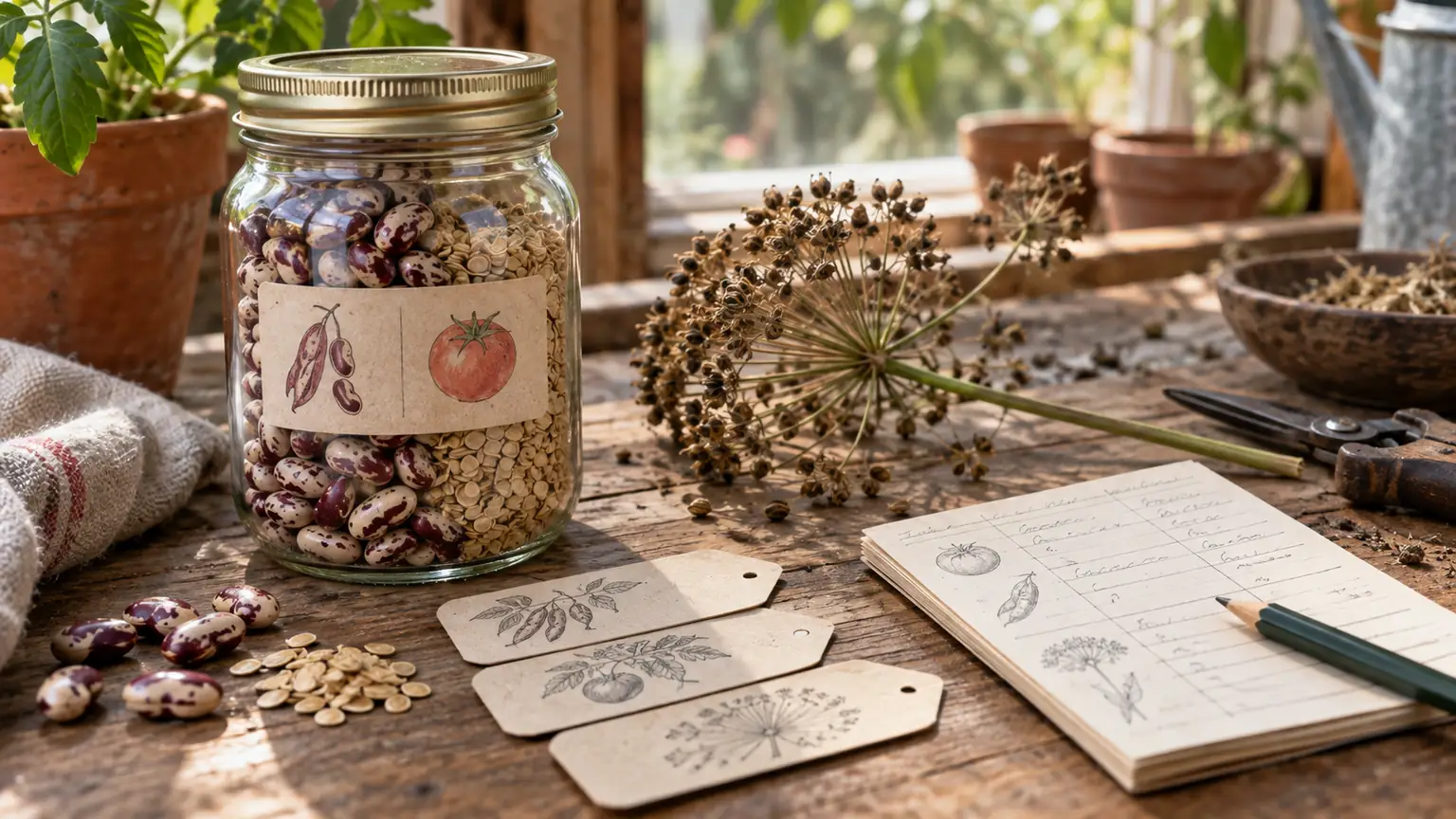
Save only what you can identify
Seed saving starts with the plant, not the jar. Select a healthy parent plant whose traits you actually want, confirm whether the variety is likely to reproduce true, and keep a record before the harvest is mixed with other varieties. Saving seed is different from preserving vegetables for eating: the drying, isolation and storage decisions are different.
| Crop situation | Useful method | Record before storage |
|---|---|---|
| Dry bean or pea with mature, dry pods | Allow pods to dry, shell, inspect and finish drying in a dry place. | Variety, parent row and harvest date. |
| Tomato with wet seed pulp | Separate pulp, rinse after the appropriate fermentation or cleaning method, then dry fully. | Fruit health, variety and cleaning method. |
| Hybrid, diseased or cross-pollinated plant | Do not promise the same result next year; seek crop-specific guidance first. | Seed source, uncertainty and reason for saving. |
Step-by-step worksheet
- Tag the parent plant while it is still growing. Record variety, health, date and the trait you are selecting.
- Check whether the crop is open-pollinated, hybrid, self-pollinating or likely to cross with nearby plants.
- Harvest only mature seed. Remove cracked, mouldy or insect-damaged material.
- Dry seed until it is hard and no longer cool or flexible. Do not seal damp seed in a jar.
- Label the container with crop, variety, year, source, method and a realistic next test date. Store cool, dry and dark, then test a small sample before relying on it.
Example: tomato and bean in one season
For a tomato, choose fruit from a healthy plant, keep the variety name and use a crop-specific cleaning method before drying. For a bean, wait until the pod is dry and the seed is firm. These are not interchangeable instructions. If a jar fogs, smells musty or contains soft seed, isolate it and discard it rather than contaminating a good collection.
Boundary: saved seed can carry disease and a hybrid may not reproduce the parent traits. Rules for exchanging or selling seed vary by country and crop. In France, obtain current advice before commercialisation or organized exchange.
Use the harvest storage guide for food preservation, and succession sowing when turning a saved variety into a planting plan.
Sources: University of Minnesota Extension: saving vegetable seeds; Seed Savers Exchange crop-specific guidance.