Plan a small vegetable garden around space and use
A productive small garden is not a miniature farm. Start with the space you can actually prepare and water, then choose crops that match the meals, time, and storage capacity of the household.
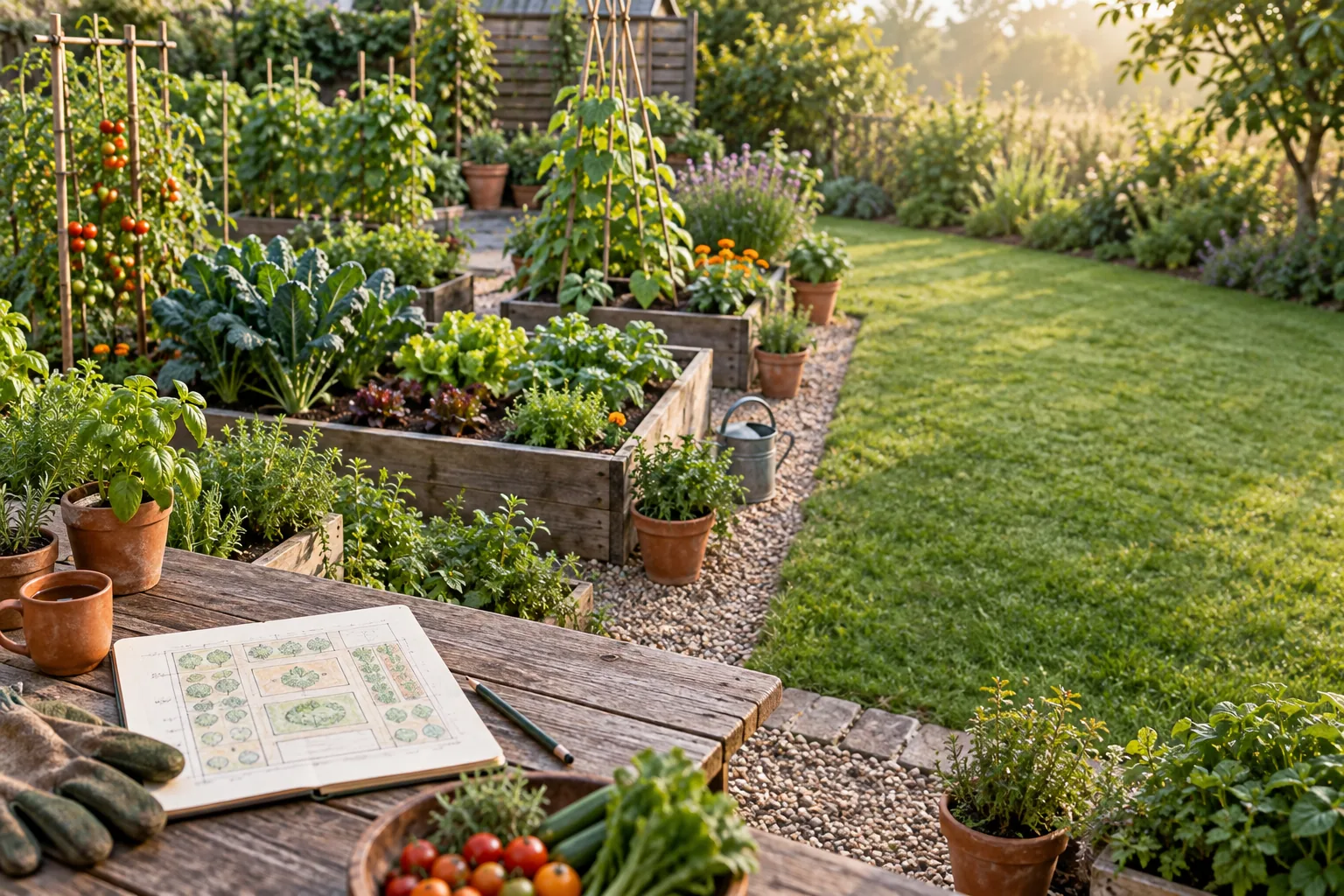
Start with a constraint: choose fewer crops than you want, reserve some space for repeat sowings, and leave room to walk, water, harvest, and recover from a failed crop.
Make the space map
| Record | What to measure | What it changes |
|---|---|---|
| Growing area | Bed length and width, container volume, paths, access, and usable depth. | How many crops can fit without crowding or losing access. |
| Light | Hours of direct sun and shade from buildings, fences, or trees. | Which crops are realistic in each position. |
| Water | Distance to the tap, watering method, and summer availability. | Whether a thirsty crop is practical or a liability. |
| Time | Minutes available for watering, weeding, harvesting, and preparation each week. | How much complexity the plan can carry. |
Choose crops by job
| Garden job | Useful crop profile | Planning question |
|---|---|---|
| Quick harvest | Salad leaves, radishes, herbs, or other short-cycle crops. | Can the household use small amounts repeatedly? |
| Reliable staple | A crop suited to the light, soil, season, and available care. | What will replace it if germination or weather fails? |
| Space-efficient crop | Climbing or vertical growth where support is safe and available. | Can the support be installed before the plant needs it? |
| Storage or preservation | A crop that can be stored, frozen, dried, or preserved safely. | Does the household have the equipment and time to use the harvest? |
The one-page crop plan
- Draw the space to scale and mark sun, water, paths, and fixed obstacles.
- Choose three to five priority crops based on meals or uses, not novelty.
- Reserve one area or container for repeated sowings and one for a replacement crop.
- Write the first sowing window, expected harvest use, and likely failure mode for each crop.
- Do not buy more seed until the plan shows where the crop will grow and how it will be used.
Example: a balcony or small bed
Use the brightest position for a crop that needs it, keep a container for quick salad harvests, and choose one vertical crop only if watering and support are practical. A small plan with herbs, salad leaves, radishes, one climbing crop, and one reliable seasonal crop can be more useful than a crowded list of vegetables that mature together.
When to cut the plan
- Remove crops that need more sun, water, or time than the site provides.
- Replace a crop that produces a glut the household cannot store or eat.
- Leave out a second vertical crop if the support would shade or obstruct everything else.
- Keep a recovery area: soil, containers, and energy are not unlimited.
Stress-test the plan before buying
Imagine the busiest week of the season: watering is late, one crop fails, and the household is away for two days. If the plan collapses, remove a crop, shorten the list, or create a backup watering route. A small garden succeeds when it remains manageable on an ordinary difficult week, not only on the day the plan is drawn. Mark the crop that can be sacrificed first so a problem does not spread through the whole layout.
Keep one blank area in the plan for recovery, replacement crops, or a late decision. That empty space is part of the capacity calculation: without it, one failure forces the gardener to disturb every other crop.
Sources: RHS vegetable-garden planning and RHS growing food in small spaces. This is a planning worksheet, not a location-specific crop calendar.