Which fall garden-bed option fits your next crop?
The best fall choice depends on three facts: when the bed is free, when you will plant again, and whether diseased residue is present. Decide from that sequence rather than treating every bed the same.
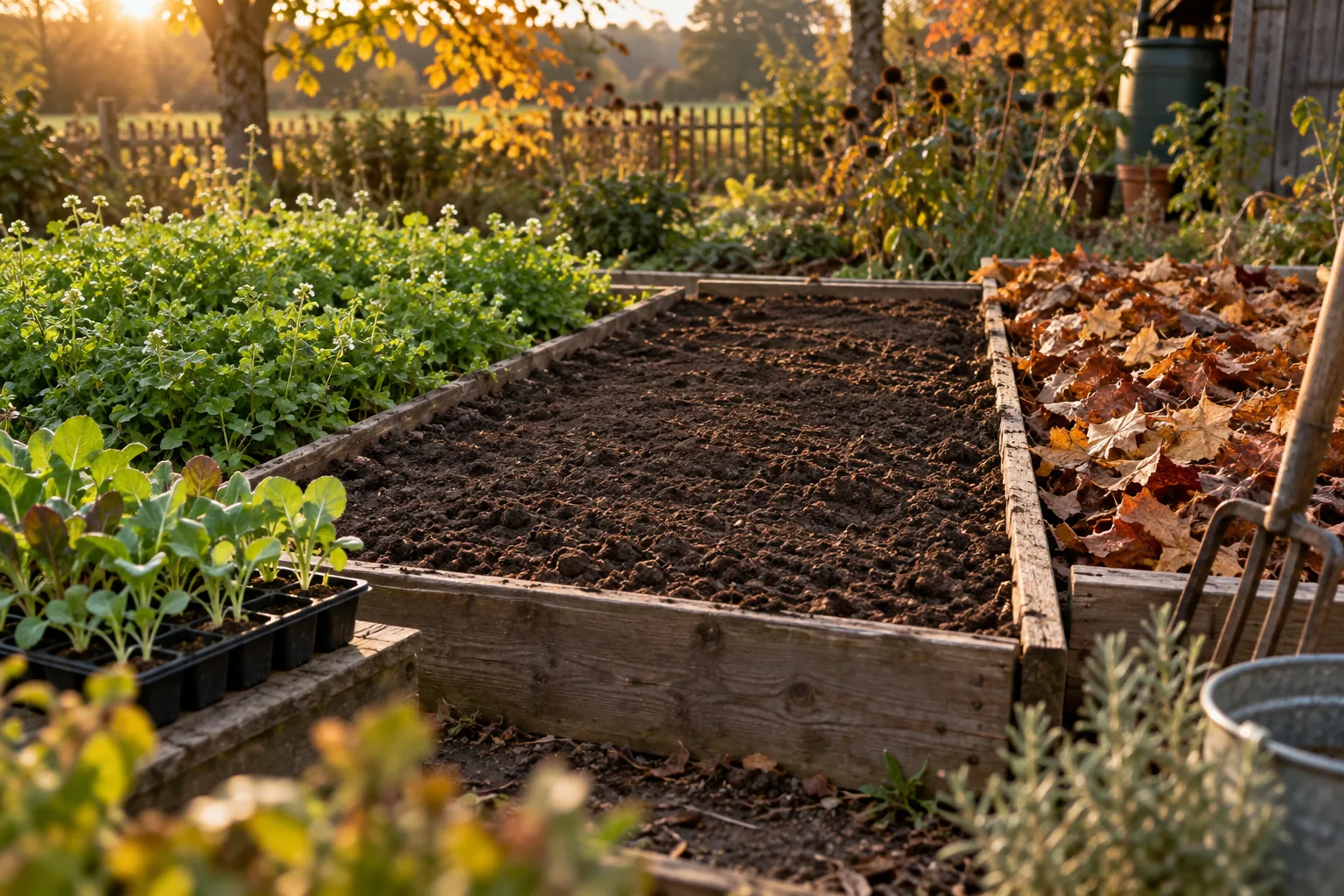
The four-way decision
| Bed condition | Best starting route | Record before acting |
|---|---|---|
| Healthy bed, early harvest, several weeks before winter | A locally suitable cover crop or a planned fall crop. | Free date, next planting date, and seed window. |
| Healthy residue, little time, spring planting planned | Chop residue and use a clean surface mulch where appropriate. | Crop family, residue amount, and spring access. |
| Diseased or heavily infested plants | Remove and dispose of affected material according to local guidance; do not spread it as casual mulch. | Symptoms, crop family, and what was removed. |
| Late harvest with no safe establishment window | Protect soil with a manageable mulch and leave a clear spring plan. | Mulch depth, edging, and inspection date. |
Ask the timing questions first
- Write the date the bed becomes available, not the date you hope it will be free.
- Write the first realistic spring crop and its planting window. A winter-killed cover crop can suit an early spring bed better than a vigorous overwintering stand that needs difficult removal.
- Check the local frost and rainfall pattern. A cover crop needs enough time and moisture to establish; a late sowing is not automatically better than a tidy mulch.
- Check crop families. A mix containing relatives of next year’s crop can complicate rotation or carry shared problems.
Build a one-bed record
Record: last crop, residue health, harvest date, soil exposure, chosen protection, seed or mulch source, next crop, and spring removal method. This turns “put the garden to bed” into a reversible decision. Photograph the bed after preparation so spring work starts with evidence, not memory.
Example: the late tomato bed
If tomatoes finish in late September and lettuce is planned for early spring, first remove diseased foliage and supports. If the local window still allows establishment, compare a suitable cool-season cover crop with a chopped-residue mulch. If neither can establish reliably, choose the mulch and mark a spring inspection date. The right answer is the option you can remove or manage before the next crop needs the bed.
Common failure modes
- Sowing by calendar date without checking the bed’s actual release date.
- Leaving diseased stems in place because they look dry.
- Choosing a species mix without checking crop-family rotation.
- Creating a spring problem by selecting a cover crop that requires equipment you do not have.
- Leaving bare soil because cleanup felt complete.
Boundary: extension recommendations vary by climate, soil, crop, and disease. For a suspected regulated pest or serious plant disease, use your state plant-health authority or local extension service rather than moving material between sites.
Pair this decision with the succession-sowing guide when planning the next crop and the seedling hardening guide when spring transplants are ready.
Sources: University of Minnesota Extension: preparing a vegetable garden for fall, cover-crop selection, and putting a garden to bed.