When should you plant garlic in fall?
Plant when the bed drains, the cloves are sound, and there is enough time for roots before sustained cold. The decision changes with soil, variety, and the next crop.
Decide before you plant
Garlic is a timing decision, not just a planting task. Write down the first likely harvest window, the bed's drainage, and the cold period your area normally receives. Plant now when the bed drains after rain and the cloves can make roots before the ground stays cold. Wait or choose a spring type when the soil is waterlogged, the bed will be disturbed soon, or your local guidance recommends a spring planting window.
| Observation | Action | Record |
|---|---|---|
| Well-drained bed, firm cloves, several weeks before sustained cold | Plant a locally suitable type at the recommended depth and spacing. | Variety, date, bed, spacing and weather. |
| Saturated soil or a bed that will be used soon | Wait, improve drainage, or use a container you can move. | Drainage problem and next inspection date. |
| Cloves soft, mouldy or damaged | Discard affected material and do not save it as seed. | Supplier, symptom and crop rotation. |
A simple planting record
- Mark the bed and note the previous crop so the next rotation decision is visible.
- Choose sound planting stock from a reliable horticultural source; a grocery bulb may not be adapted to your conditions.
- Prepare a crumbly, well-drained surface. Do not work soil when it smears or stays saturated.
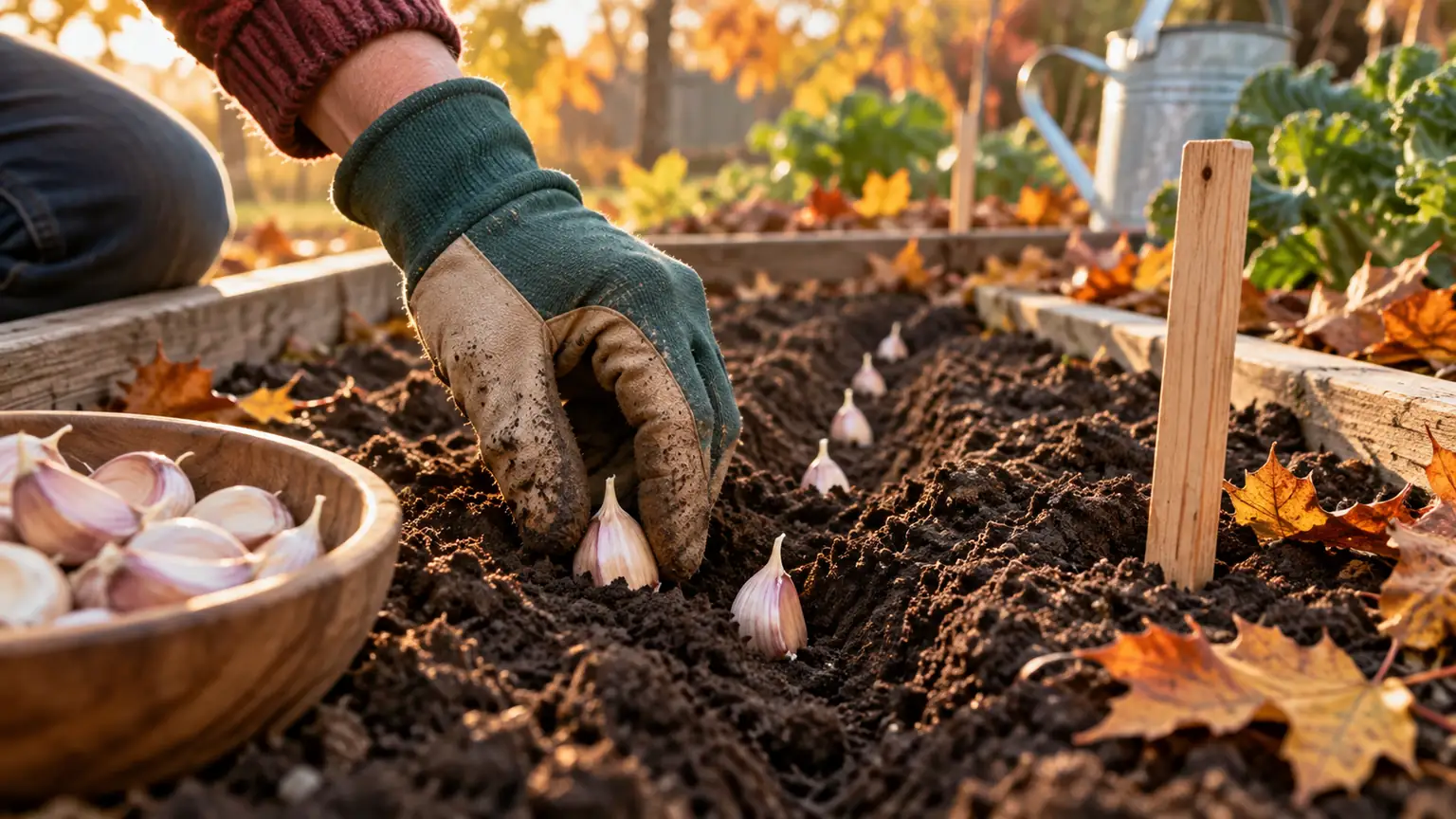
- Set cloves with the pointed end up, using the depth and spacing recommended for your type and climate. Add a manageable mulch only after checking local guidance.
- Label the row and photograph it. Recheck emergence, drainage and winter damage rather than adding water by habit.
Example and failure path
A gardener has a free bed in early October, heavy rain in the forecast and a spring crop planned. The right decision may be to delay until the surface drains, or to choose a raised container, not to force planting into mud. If shoots emerge and the bed floods repeatedly, stop adding amendments blindly, record the pattern and ask a local extension service about drainage and disease.
Boundary: planting dates, varieties and disease risks vary by region. Do not use this guide as a pesticide prescription. Suspected regulated pests or repeated rot require local plant-health or extension advice.
Continue with the fall bed decision guide, then use the frost protection guide when weather threatens the crop.
Sources: Royal Horticultural Society: grow your own garlic; local university extension guidance should set the final date, type and spacing.