How to store winter squash after harvest
Winter squash stores well only when the harvest, curing, container, temperature, and inspection routine all fit the variety and the room. Start with sound, mature fruit rather than trying to rescue soft or injured squash. A pantry can work, but it must be dry, ventilated, cool without freezing, and easy to inspect.
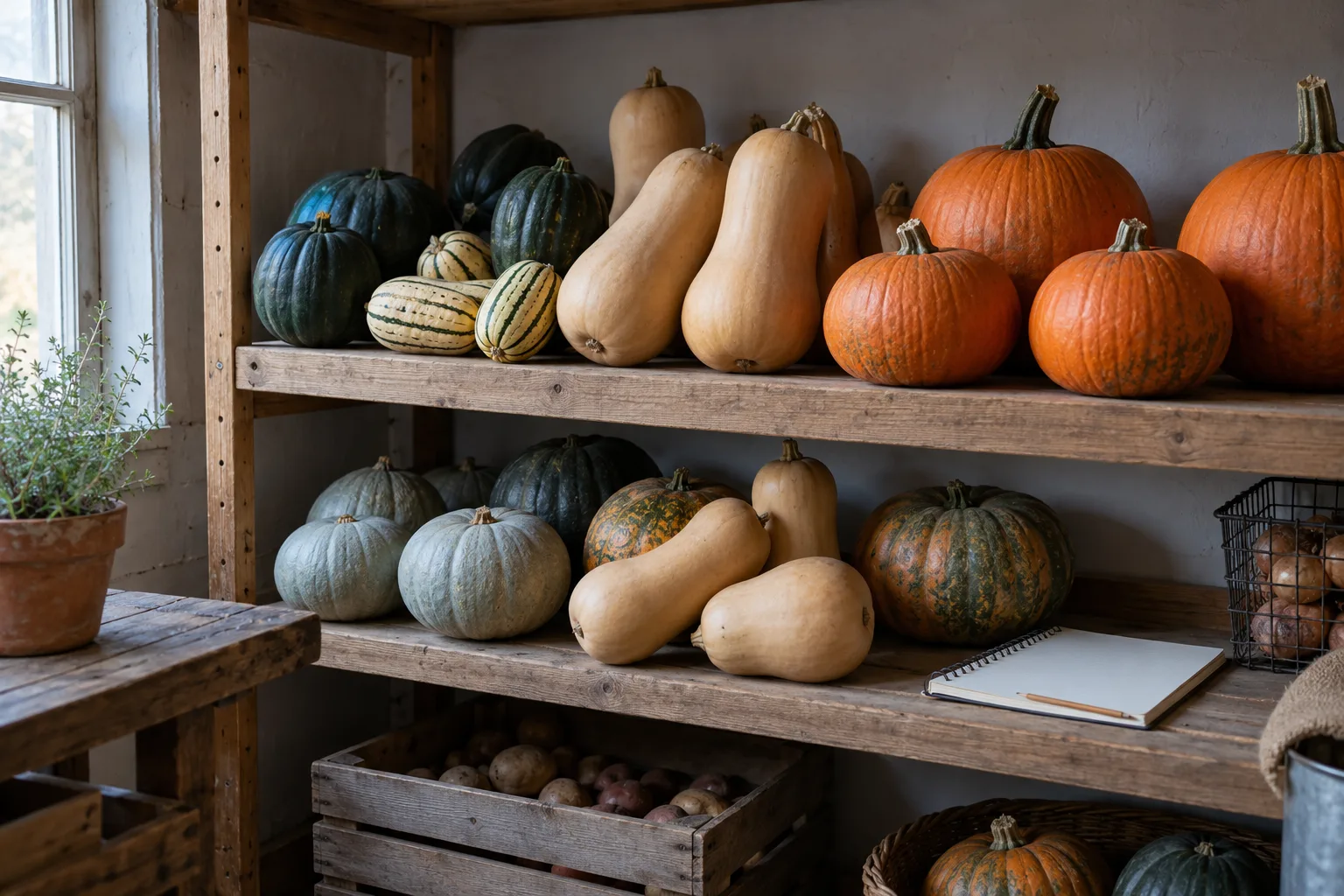
Boundary: discard squash that is leaking, moldy, foul-smelling, or collapsing. Do not taste a visibly spoiled squash to assess it.
Sort before you store
| Observation | Decision | Record |
|---|---|---|
| Hard rind, dry stem, no soft spot | Cure and store | Variety, harvest date, bed |
| Small scrape with dry surface | Use first and inspect often | Location of damage |
| Wet rot, deep bruise, leaking stem | Do not store | Remove from storage area |
Use a simple process
- Harvest before a hard frost or damaging cold, leaving a useful stem where possible. Carry the squash instead of lifting it by the stem.
- Brush off loose soil without washing. Let the surface dry in a protected, well-ventilated place.
- Cure only when the variety and local guidance support it; a warm, dry period can toughen the skin, but heat and humidity can also encourage rot.
- Place each squash in a single layer with air around it. Do not stack directly on damp concrete or push fruit against a cold exterior wall.
- Check weekly. Turn only when safe, and remove any fruit that develops a soft spot before it touches neighbors.
Worked example
A gardener harvests six mature acorn squash before a forecast frost. Two have stem damage, so they are marked “use first” and kept in a separate basket. Four sound squash cure on a shelf, then move to a dry pantry. The weekly note records firmness, visible moisture, and room conditions. This avoids treating all six fruits as if they have the same storage life.
When the room is wrong
- Condensation appears: improve ventilation and move the crop; do not seal damp fruit into a plastic bin.
- The room freezes: choose a less exposed location or use the crop sooner.
- Fruit ripens unevenly: sort by condition and variety instead of extending one date to everything.
- Rot repeats: review harvest damage, curing, cleanliness, airflow, and whether the crop was mature.
Sources
The Oregon State Extension fall gardening guide covers maturity, frost timing, and cool, dry storage. Adapt temperature and curing advice to the variety and your local extension service.