How to mulch a vegetable garden for winter
Winter mulch is a protective layer, not a blanket to place everywhere at the same thickness. The useful choice depends on whether the bed contains living crops, bare soil, perennial plants, or a pest-sensitive crop, and on whether the material is mature enough not to rob the surface of nitrogen while it decomposes.
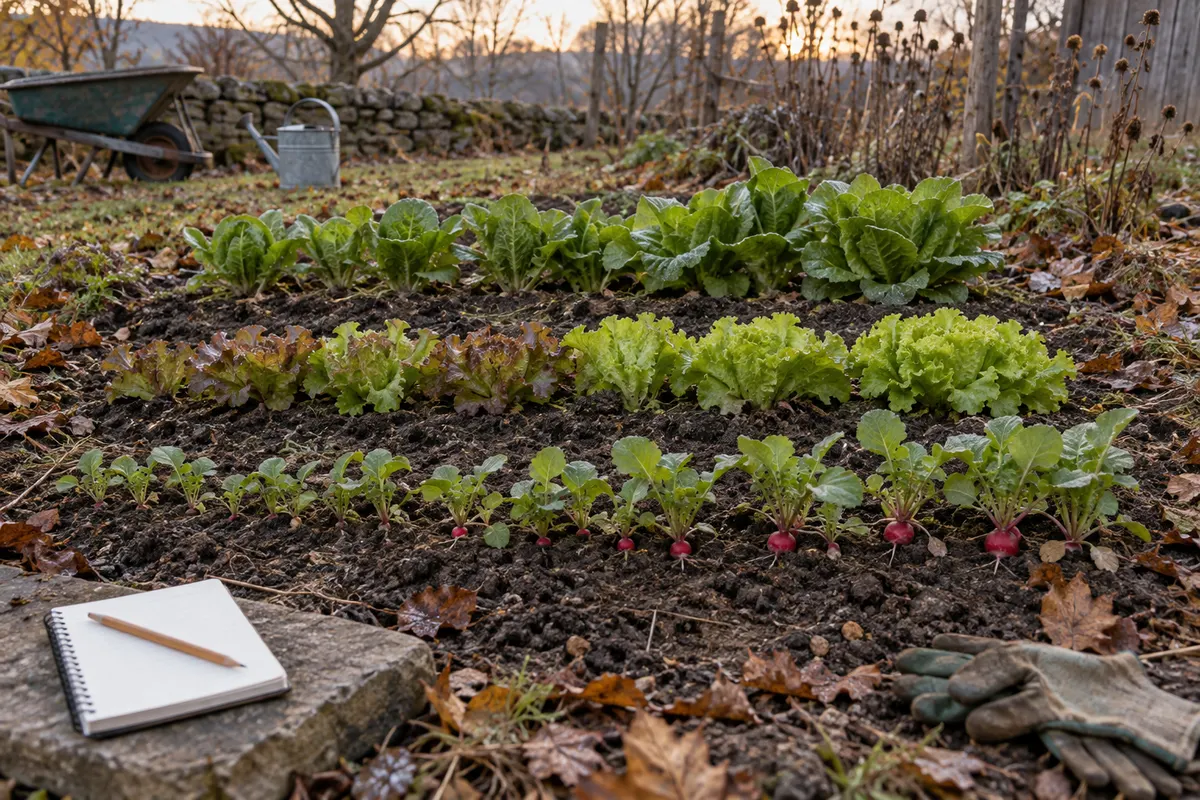
Rule: keep mulch off plant crowns and stems, leave drainage paths clear, and inspect underneath after wet weather. Mulch can reduce splash and erosion, but it can also hide slugs, rodents, rot, or a persistently waterlogged bed.
Match material to the job
| Situation | Useful layer | Check |
|---|---|---|
| Bare vegetable bed | Mature compost or leaf mould spread over the surface. | Do not bury fresh, woody material before sowing. |
| Established perennial | Organic mulch around, not over, the crown. | Keep the base ventilated and inspect for rot. |
| Wet or heavy soil | A thin, breathable layer only after drainage is understood. | Mulch does not cure compaction or standing water. |
Apply it as a decision, not a ritual
- Clear diseased foliage and remove weeds that would seed before spring.
- Check soil moisture. If the bed is saturated, fix the drainage question before adding a thick layer.
- Choose clean, mature material and record its source.
- Spread evenly, keeping a hand-width gap around stems and crowns.
- Inspect once after heavy rain and again before spring sowing; rake back where the soil stays cold or wet.
Worked example: a mixed autumn bed
One bed has overwintering greens, a cleared row, and a perennial herb at the edge. The gardener leaves the greens accessible, adds a modest layer of mature compost to the empty row, and keeps mulch away from the herb crown. A thick blanket would make spring access harder and could hold moisture against the plant. The record names the material, date, depth by hand measurement, and spring result.
Common mistakes
- Fresh wood chips on a sowing bed: keep them for paths or allow them to mature before using them where seeds need to emerge.
- Mulch touching stems: pull it back to reduce persistent dampness and concealment.
- Assuming every leaf is safe: remove diseased or contaminated material and avoid spreading weeds.
- Using mulch to hide a problem: investigate standing water, compacted soil, and rodent activity first.
Sources
The RHS mulching guidance covers material, timing, and application. Use local extension advice for crop-specific frost and disease decisions.