How to use green manure in a vegetable garden
Green manure is a temporary crop grown to cover otherwise bare soil, protect its structure, and return organic matter later. It is useful when a bed will be empty for several weeks, but the right choice depends on sowing date, soil, crop rotation, wildlife, and when the next crop must go in.
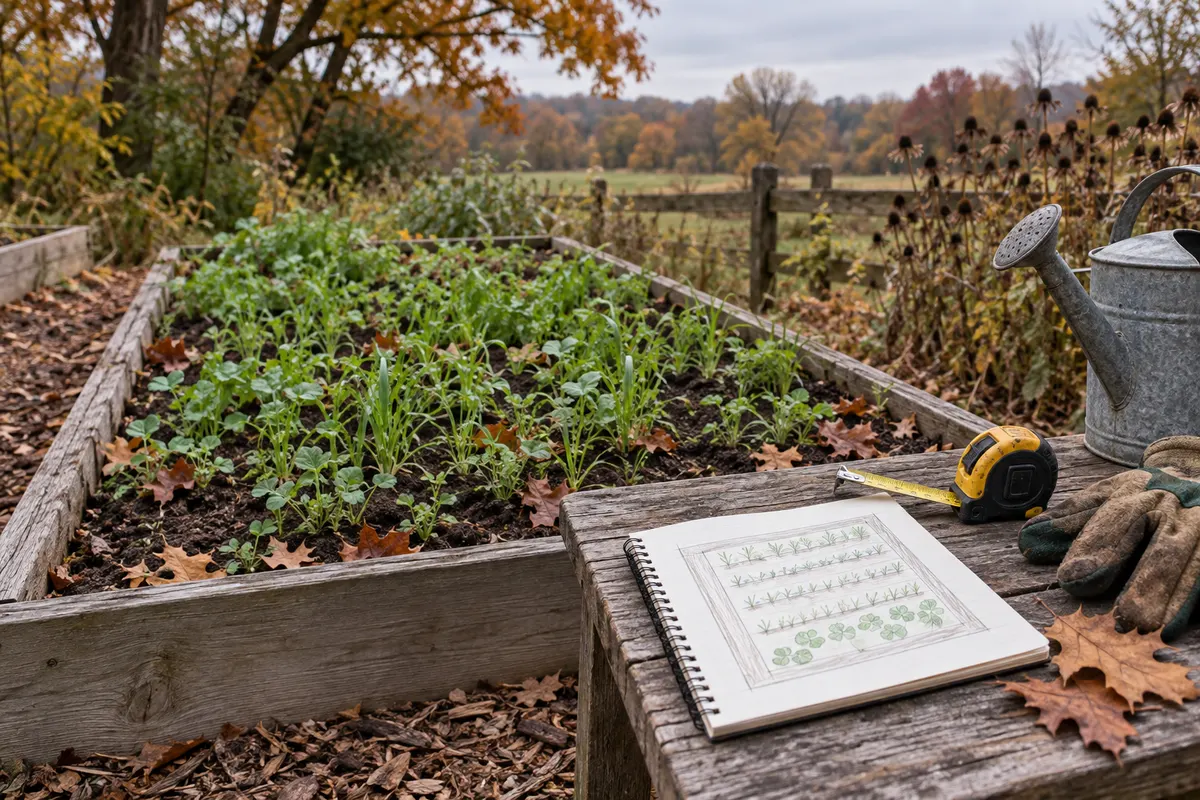
Working boundary: treat green manure as a cover decision, not a promise of free fertility. Do not sow a brassica green manure before another brassica crop if clubroot is a concern, and do not dig living material in just before planting.
Choose the job before the seed
| Need | Possible approach | Watch for |
|---|---|---|
| Cover bare soil over winter | Winter rye, winter tares, or field beans where the season allows. | A dense cover can shelter slugs and be hard to clear. |
| Fast short gap | A quick, non-brassica cover that can be cut before the next crop. | Allow time for residues to wilt and break down. |
| Protect soil without digging | Leave roots in place and cover cut foliage as mulch. | Check whether volunteer growth competes with the spring crop. |
Plan the bed in five steps
- Map the gap: write the last harvest date, the next planting date, and the days available between them.
- Check rotation: note what family grew there. Avoid a cover that increases a known disease or pest risk.
- Match the cover: use a hardy overwintering cover for a long gap and a short-lived cover for a narrow window.
- Sow and record: note seed, date, weather, soil condition, and where the bed drains poorly.
- Set the stop date: plan how the cover will be cut, flattened, removed, or left as surface mulch before the next crop.
Worked example: an empty October bed
A 2-by-3 metre bed will be empty after beans are cleared in early October and is needed for potatoes in spring. The gardener records the legume crop, rules out a rushed second legume, and chooses a winter cover suited to local conditions. The plan includes a spring cut, a wilt period, and a month of waiting if the material is incorporated. The key decision is not the seed packet; it is whether the spring planting date leaves enough time for the residue to settle.
Failure modes and next decisions
- Patchy emergence: check seed-to-soil contact and moisture before reseeding the whole area.
- Cover becomes tall and tangled: cut earlier rather than waiting for a larger biomass that is harder to manage.
- Slugs increase: inspect under the cover, reduce dense shelter, and protect the next crop with an integrated plan.
- The spring crop is due soon: stop the cover and use a surface mulch rather than burying fresh green material.
Keep a useful record
At the end of the season, record whether the soil stayed covered, how much work clearing required, and whether the next crop established normally. A cover is worth repeating only when its protection and soil benefits exceed the work and risk in that particular bed.
Sources
The RHS green manure guidance supports seasonal selection, rotation caution, and waiting after incorporation. The RHS vegetable growing guidance provides crop and soil context. This page is a planning worksheet, not a climate-specific sowing calendar.
Termination timing matters
Extension guidance commonly places fall cover-crop sowing in a limited late-summer to autumn window, with the exact date depending on region and weather. Plan the termination before seed set. Mow, flatten, or cover the residue as appropriate, then allow roughly two weeks for fresh material to break down before an early vegetable planting. Oats and some radish types may winter-kill; hardy rye and legumes may resume growth in spring and need a deliberate stop.