How to clean a vegetable bed and take a fall soil sample
Fall cleanup is not a single “clear everything” job. The useful sequence is to identify what is healthy enough to compost, remove diseased or pest-heavy material from the food-growing area, protect bare soil, and take a soil sample that represents the bed. Doing those steps in the wrong order can spread disease or produce a misleading test.
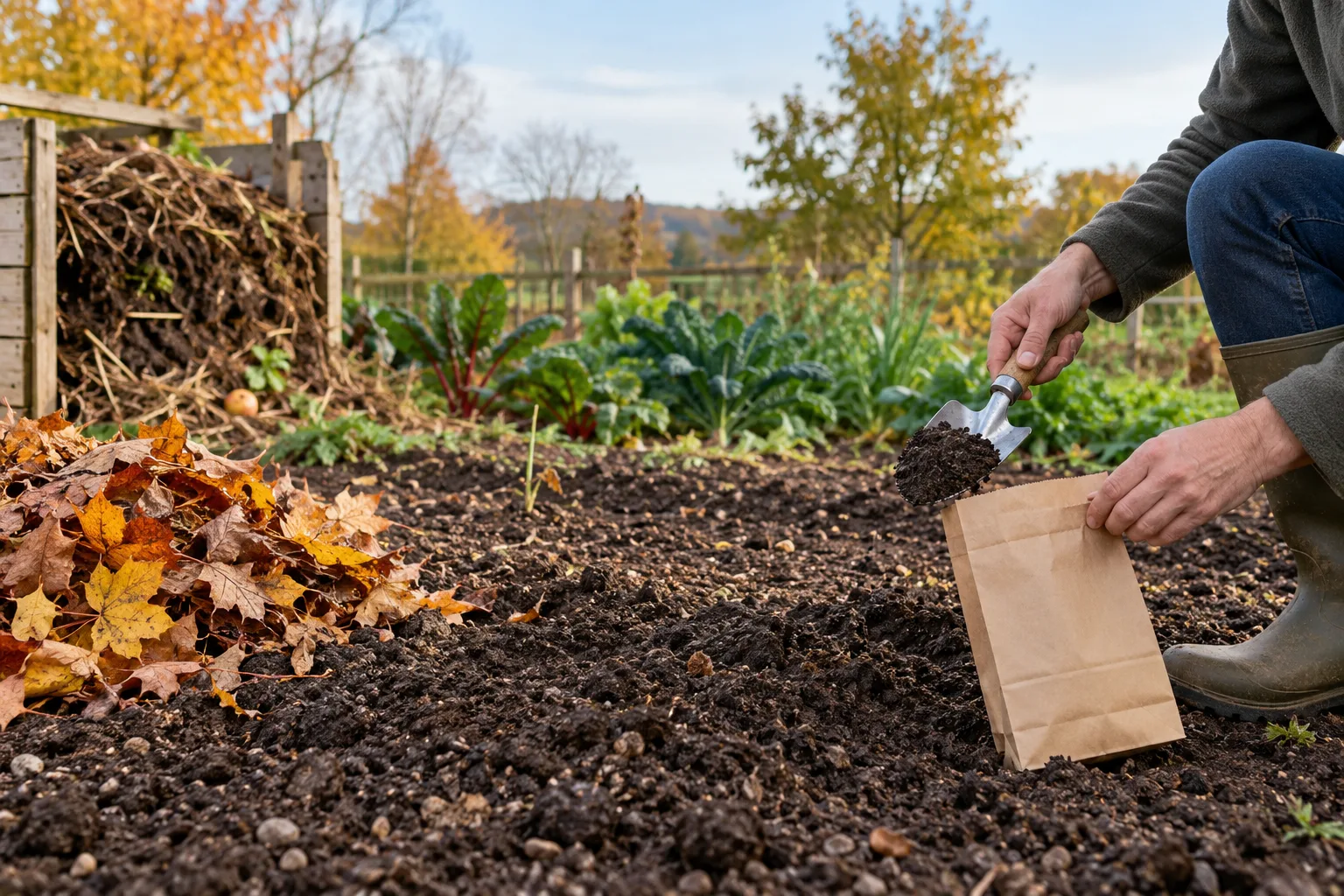
Boundary: local soil laboratories and extension services control sampling depth, container, and amendment recommendations. Do not add lime or fertilizer from a guess.
Separate materials before moving them
| Material | Default route | Reason to pause |
|---|---|---|
| Healthy leaves and spent plants | Home compost if your system reaches the needed conditions | Persistent disease or heavy pest load |
| Blighted or clearly diseased foliage | Local disposal or approved hot compost | Unclear diagnosis or regulated pest |
| Weeds with mature seed | Remove from ordinary compost unless the system is managed | Seed heads or rhizomes |
Take a representative sample
- Map the bed and exclude unusual spots such as a compost pile edge, manure heap, path, or visibly wet patch.
- Use clean tools. Remove surface mulch and take several cores from the same rooting depth used by the planned crops.
- Mix the cores in a clean container, remove stones and large roots, and submit the laboratory’s requested amount.
- Label the bed, date, depth, previous crop, next crop, and any amendment already applied.
- Keep the result with the bed map rather than treating it as a permanent verdict for every container.
Worked example
A four-bed garden had tomatoes in one bed and clean beans in another. The gardener removes tomato foliage separately, leaves a thin protective mulch on the empty surface, and samples each bed independently. The result shows that one bed needs no lime, despite a neighbor’s general advice. The record prevents an unnecessary amendment and makes next spring’s crop choice easier.
What changes the plan?
- Unknown disease: photograph symptoms and ask local extension staff before composting.
- Very wet soil: wait rather than compacting it with repeated traffic.
- Only containers: sample or replace growing medium according to the crop and local guidance.
- Bare soil through winter: use suitable mulch or a cover crop, while keeping the planned spring planting date visible.
Sources
The Oregon State Extension fall garden guide covers cleanup, compost, cover crops, and soil sampling. The University of Maryland Extension fall gardening guidance explains seasonal planning and crop timing. Adapt the sample instructions to your local lab.