How to rotate crops in a small vegetable garden
Crop rotation means moving plant families between beds or containers over several seasons. In a small garden, the useful goal is not a perfect farm plan. It is to avoid repeating the same family in the same soil when you can, record what happened, and make disease and fertility decisions visible.
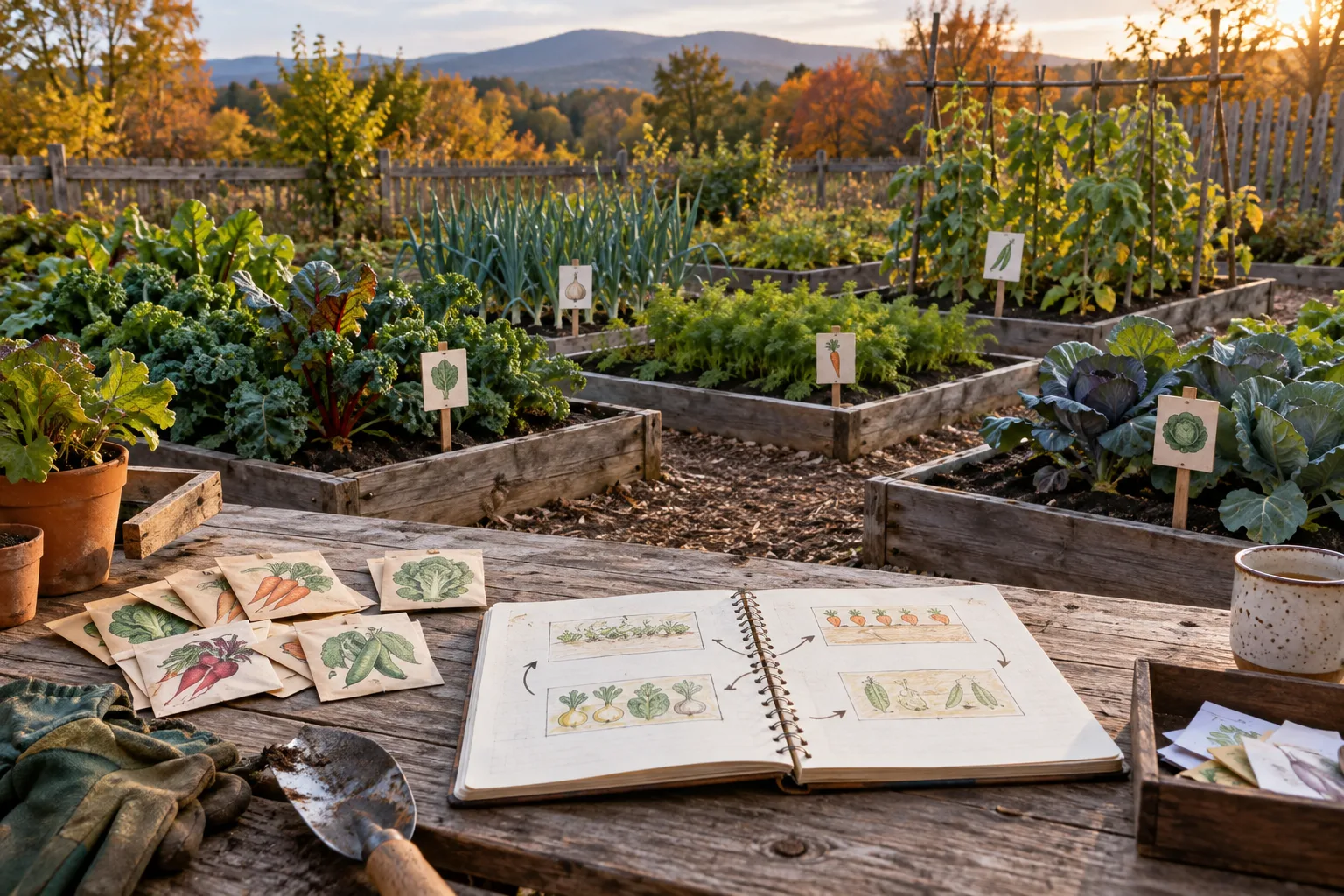
Boundary: rotation can reduce recurring pest, disease, and nutrient problems, but it cannot guarantee a healthy crop. Perennial crops, containers, soil-borne disease, and local recommendations need separate treatment.
Group crops by family
| Family | Common examples | Planning question |
|---|---|---|
| Nightshades | Tomato, pepper, eggplant, potato. | Where can this group move next year? |
| Brassicas | Kale, cabbage, broccoli, radish. | Is there a clubroot or pest history? |
| Legumes | Beans and peas. | Will a following crop use the changed fertility? |
| Roots and other crops | Carrots, beets, lettuce, squash, onions. | Does the crop need loose soil, compost, or space? |
Build the rotation
- Draw the beds, containers, and permanent plantings. Give each movable area a name.
- Write the main family grown there this season, not only the individual variety.
- Move heavy-feeding or disease-sensitive families to a different area when space allows.
- Use a cover crop or a non-host crop where a bed cannot follow the ideal sequence.
- Record the next crop, the reason for the move, and the condition that would change the plan.
Worked example: four small beds
Bed A grew tomatoes, Bed B grew cabbage, Bed C grew beans, and Bed D grew carrots. Next year, the gardener moves tomatoes to Bed C, cabbage to Bed D, beans to Bed A, and roots to Bed B. This is not a complete four-year guarantee, but it breaks the immediate repetition and creates a record for the following season. A cover crop can occupy a spare bed, while perennial herbs stay outside the rotation map.
When a rotation is not enough
- The same disease returns: identify the disease before choosing a longer interval or removing affected material.
- There is only one container: replace or refresh growing medium where appropriate and clean tools and pots.
- Fertility changes: use a soil test or locally relevant guidance instead of assuming a family label predicts nutrient demand.
- Space is too tight: choose the healthiest workable sequence and prioritize sanitation and resistant varieties.
Sources
Iowa State Extension, WSU Extension, and the USDA crop rotation guidance support rotating by family and using multi-year records. Adapt the sequence to local disease guidance.